

Frac Sand Quality Control: Testing Every Load Before It Leaves the Yard | Explore Group
Why Sand Quality Control Is a Supply Chain Problem, Not Just a Mine Problem
Proppant quality is one of the few completion inputs an operator can't easily verify after the fact. By the time a load has been through a transload yard, handed off to a hauler, and delivered to the wellsite, there is often no clean way to trace what changed along the way. If a stage underperforms, the question of whether the sand, the handling, or something else was the cause can be difficult to answer after the fact.
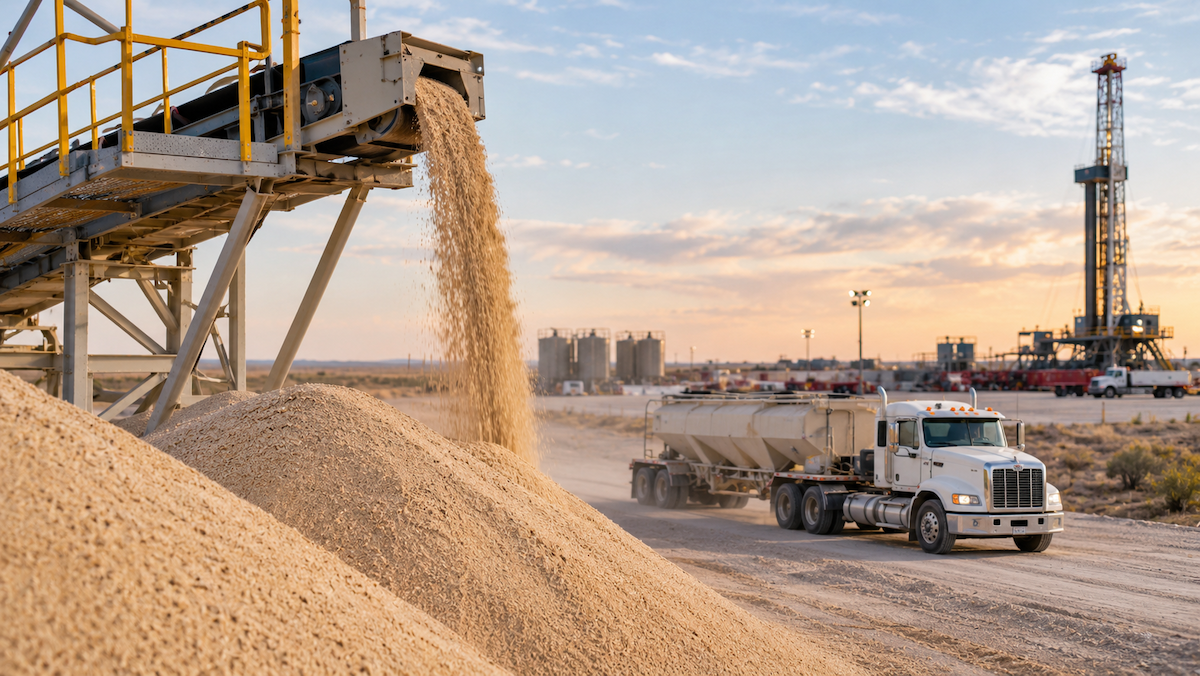
Explore Group built its frac sand supply around a different structure: owning the mine that produces the sand and the fleet that hauls it, rather than sourcing sand from one party and moving it with another. That ownership starts at the Explore Sand Mine, a wet sand mine in the Delaware Basin south of Hobbs, Texas, where every load is tested before it leaves the yard.
Challenge: A Broken Chain of Custody Makes Quality Someone Else's Problem
When a mine, a transload operator, and a hauler are three separate companies, no single party is accountable for the sand's condition from source to wellsite. Each one can reasonably point to the handoff before or after its own. That gap does not usually surface until a completion underperforms and a program is trying to reconstruct what happened.
Solution: Because the Explore Sand Mine and Explore Group's frac sand last-mile logistics operate under the same team, the load that leaves the yard tested is the same load a hauler picks up and the same load that reaches the blender. There is one operation to ask, not three.
Challenge: Reserve Uncertainty Complicates Multi-Year Sourcing Plans
A drilling program built around a multi-year schedule needs a sand source that can hold up for the life of that schedule. When a program sources opportunistically from whichever mine has capacity that quarter, the sourcing plan is only as stable as the spot market.
Solution: The Explore Sand Mine has supplied energy operators for more than 20 years and carries an estimated 45 years of remaining reserves. That gives an operator planning a multi-year program a sourcing answer that does not need to be revisited every time market conditions shift.
What Load-Level Testing Actually Establishes
Testing every load before it leaves the yard does one specific thing: it creates a documented record of what left the mine at the moment it left. That record is what an operator, a completions team, or Explore Group's own hauling crews can point to if a question comes up later about a specific load, instead of relying on memory or a secondhand account of what happened at the yard that day.
Why This Matters More as Program Volume Increases
A single well's completion can call for a substantial number of proppant loads, and a multi-well pad or a full-year program multiplies that volume many times over. At that scale, a testing gap on even a small percentage of loads is no longer a minor exception. It is a pattern an operator eventually has to account for in the completion data.
Where Quality Control Fits Into the Rest of the Supply Chain
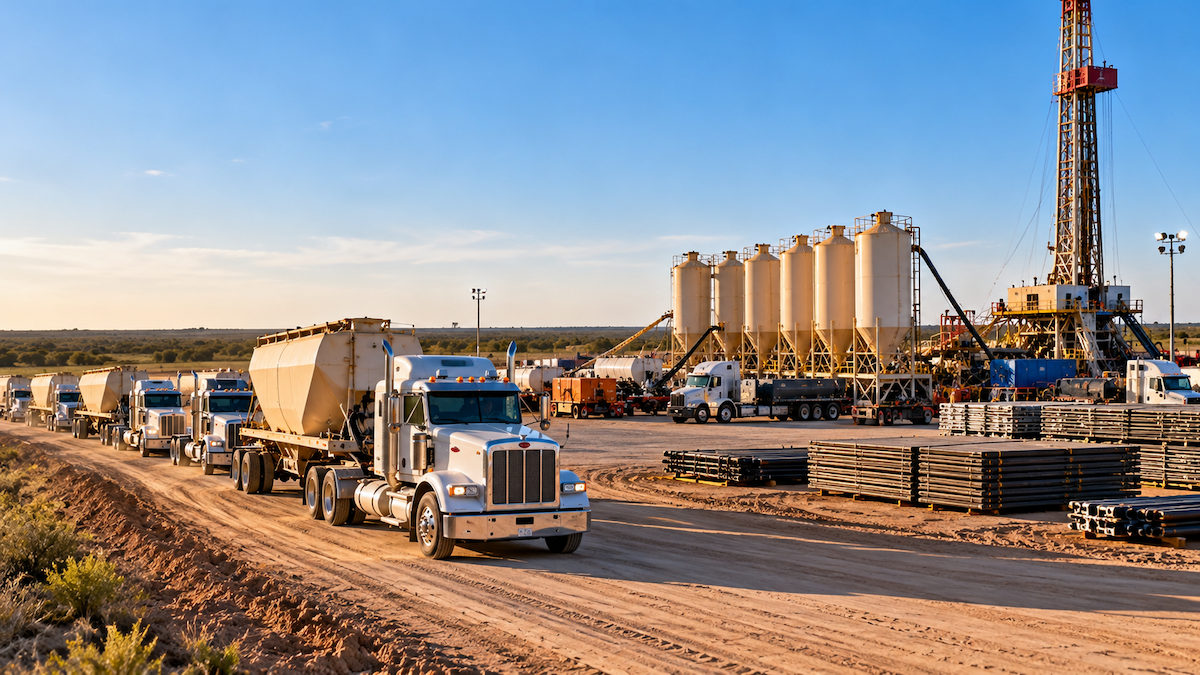
Testing at the mine is one piece of a longer chain that includes hauling, PO and allocation management, and quarterly performance reviews after every pad and program. Explore Group has run frac sand last-mile logistics since 2017 across the Permian, Eagle Ford, MidCon, and Haynesville basins, with equipment, personnel, rig mats, and mobilization included under one team. Quality control at the source is the first link in that same chain, not a separate function bolted on beside it.
Final Thoughts
Sand quality control is easy to overlook when it is working and difficult to reconstruct when it isn't. Owning the mine and the hauling fleet under one operation does not eliminate every variable in a completion's performance, but it does mean an operator is dealing with one accountable team from the yard to the blender rather than piecing the story together from several. For operators evaluating a sand source for a multi-year program, that continuity is worth weighing alongside price: tested loads, documented records, and one team responsible for both ends.
More Articles

Ready to Work With Explore Group?
