

Planning Frac Sand and Crude Logistics Around West Texas Weather | Explore Group

A Weather Delay Only Becomes a Program Delay If Nobody Planned For It
Frac sand and crude logistics in the Permian, Eagle Ford, and Delaware Basin run on tight sequencing: sand has to reach the blender on schedule, and crude has to move off the lease on schedule. West Texas weather does not hold still for that schedule. Winter freezes, summer heat, and ordinary seasonal variability are a normal part of operating in this region. Operators who plan around them keep their programs moving; those who react to them absorb the delay.
Challenge: Winter Freezes and Lease Road Conditions
Cold snaps are a recurring feature of West Texas basin operations. When temperatures drop, unpaved and caliche lease roads can become harder to travel safely, and load and unload times at the pad can stretch out. For a program on a set delivery cadence, even a short freeze can slow the trucks bringing proppant into the blender or moving crude off the wellhead, and a slower cycle on one leg of the route can back up the whole day.
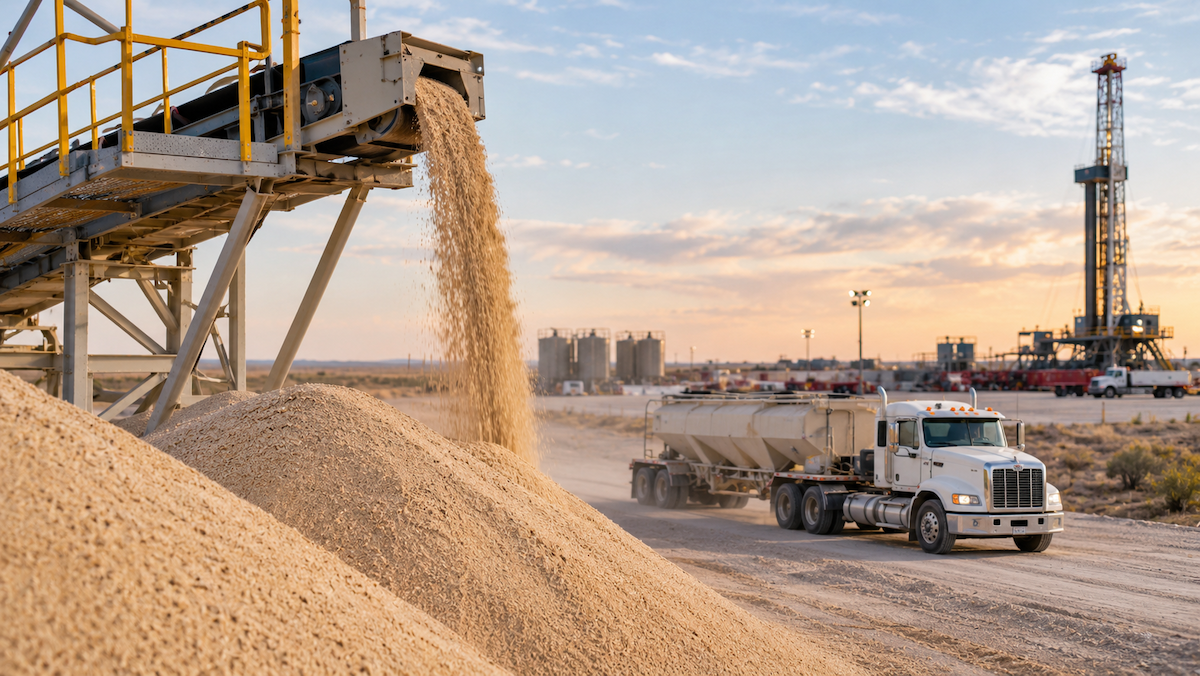
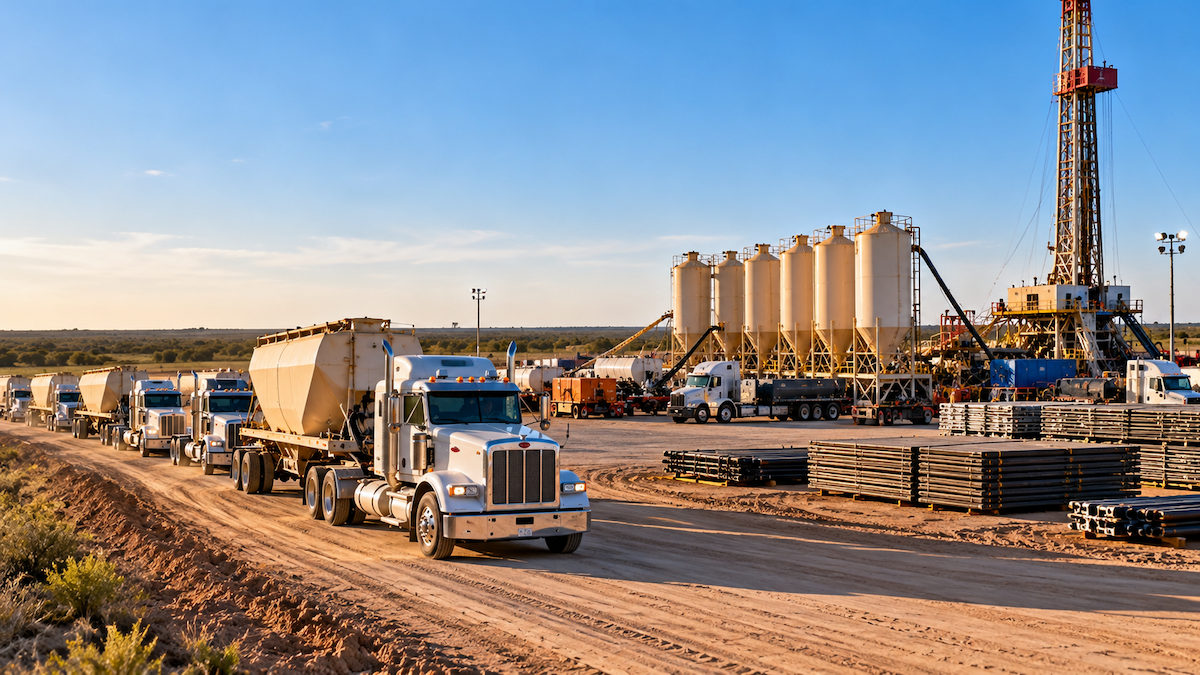
Solution: Explore Group has run frac sand last-mile logistics since 2017, moving proppant from origin into the blender, hopper bottom or container, for operators across the Permian, Eagle Ford, MidCon, and Haynesville basins. Equipment, personnel, rig mats, and mobilization are handled as part of the service, along with full PO and allocation management, so a program's sand supply is coordinated by a team that already accounts for lease road conditions rather than discovering them truck by truck.
Challenge: Summer Heat and Equipment Reliability
Summer heat puts a different kind of strain on a hauling program. Trucks and trailers run harder in high temperatures, and load times can vary as crews manage conditions across a long haul day. A program that depends on a single carrier or a thin bench of trucks has less room to absorb that variability without falling behind.
Solution: With 100+ owned trucks, 250+ owned chassis and belly dumps, and 50+ carrier partners, Explore Group carries enough equipment depth that a hot stretch on one route does not have to become a bottleneck for the whole program. Because the fleet is owned rather than brokered piecemeal, scheduling decisions can be made directly instead of waiting on a third party to reallocate trucks.
Challenge: Weather Variability Across Multiple Basins
Programs that span the Permian, Eagle Ford, and Delaware Basin do not see the same weather at the same time. An operator running sand into one pad and crude out of another may face a freeze in one basin and normal conditions in another, in the same week. Coordinating that after the fact, basin by basin, is slower than building the buffer in ahead of time.
Solution: Explore Group's Petroleum Liquids and Midstream operation runs dedicated crude marketing, gathering, and trucking backed by tank storage and pipeline connections across West Texas, alongside the frac sand side of the business. Because both sides of a program can be planned by one company with its own equipment and storage, a schedule adjustment in one basin does not require restarting the conversation with a separate vendor for the other.
Matching Sand Supply to the Program's Real Schedule
Sand supply reliability starts before a truck leaves the yard. Explore Group owns the Explore Sand Mine, a wet sand mine in the Delaware Basin south of Hobbs, Texas, with more than 20 years supplying energy operators and an estimated 45 years of remaining reserves. Every load is tested before it leaves the yard, so sand quality is not something a completions crew has to double check during a week when conditions are already harder to manage.
Coordinating Sand and Crude as One Program, Not Two
A program that treats sand hauling and crude trucking as separate problems ends up planning around weather twice. Explore Group's team brings a combined 40 years managing and developing pipeline and rail operations, alongside its OTR Freight and Logistics arm, which handles asset-based freight across the US, Mexico, and Canada, including full truckload, intermodal, rail, ship chartering, procurement, and warehousing. Coordinating sand, crude, and general freight under one operator means a weather-driven adjustment in one part of a program can be worked into the rest of the schedule instead of handled as a separate fire drill.
Final Thoughts
Seasonal weather in West Texas basins is not something a drilling or completions program can avoid, but it is something a program can plan around: confirming lease road conditions ahead of a forecasted cold snap, keeping enough equipment depth that one slow route does not stall the haul, and having a single point of coordination across basins. Explore Group's model, owning its own trucks, chassis, belly dumps, sand mine, and crude marketing and trucking operation rather than only brokering someone else's, is built for that kind of planning, backed by quarterly performance reviews delivered after every pad or program.
More Articles

Ready to Work With Explore Group?
